
Cai Mon, Ben Tre Seedlings
Why Cai Mon – Cho Lach is known for seedlings, which seedlings are common there, grafted versus air-layered plants, and how to pick a healthy seedling.
- Cai Mon
- Seedlings
- Fruit trees
- Choosing varieties
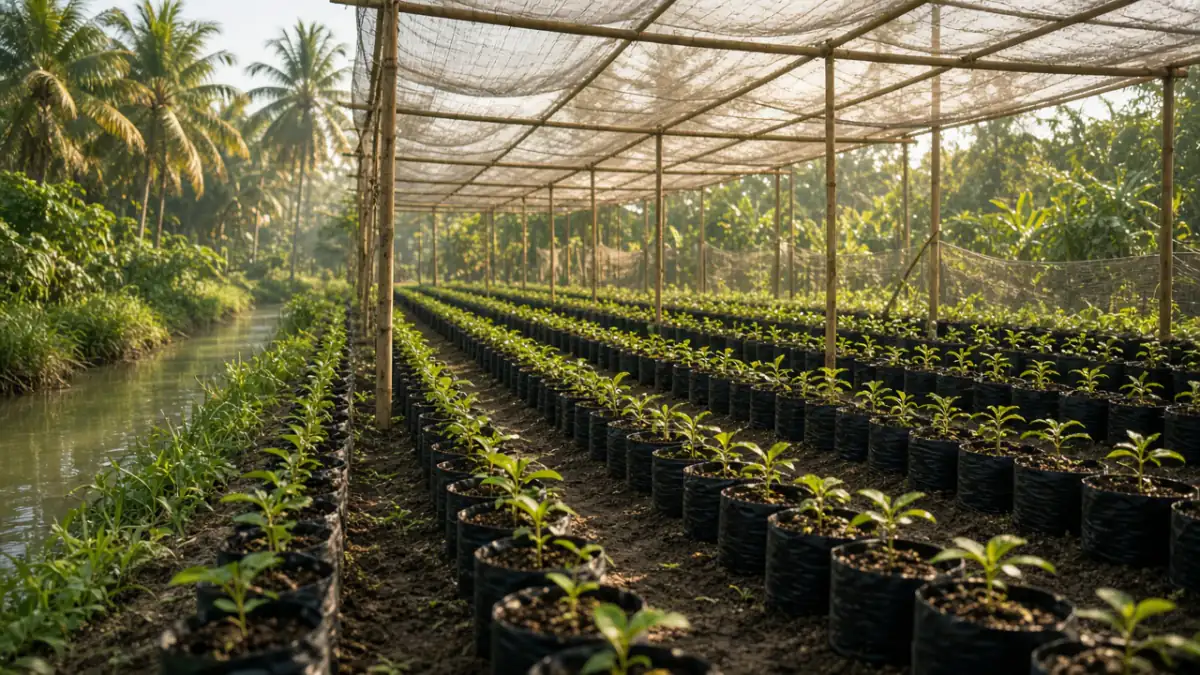
When people mention Cai Mon, Ben Tre seedlings, growers across Vietnam think of a region with a long tradition of seedlings, fruit trees and ornamental plants.
So what makes Cai Mon seedlings special, and how should you choose one? Let's take a look.
Cai Mon – a region built on seedlings
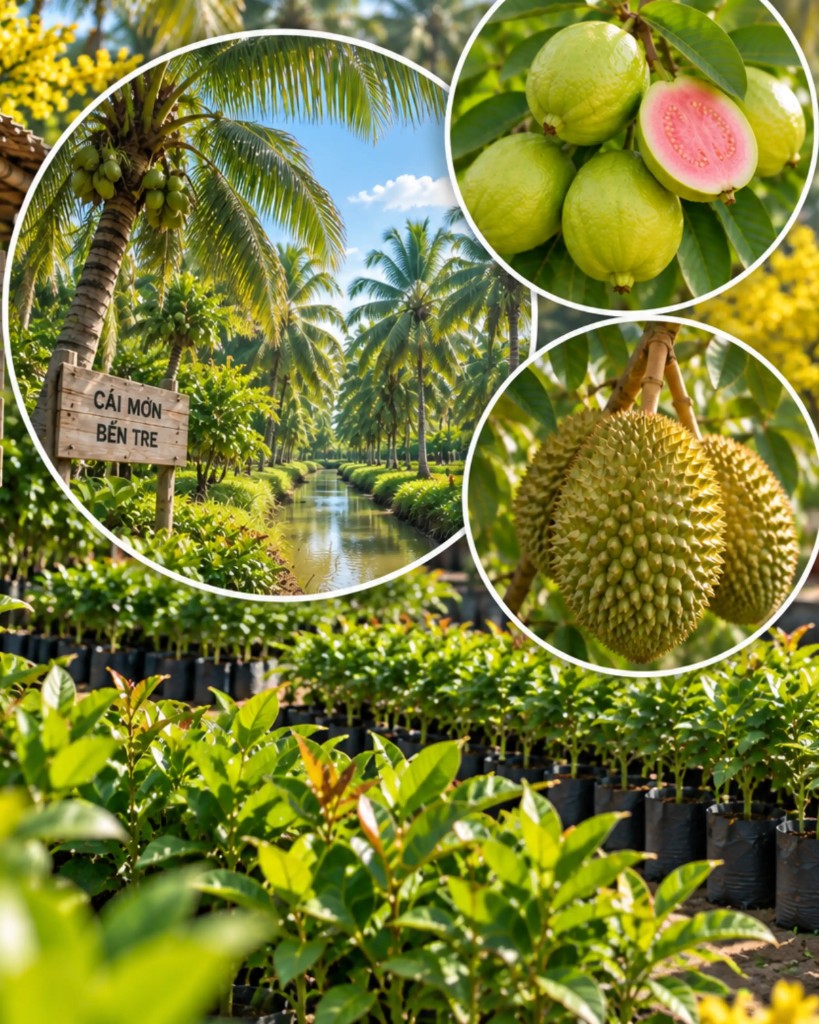
Cai Mon lies in the Cho Lach area of Ben Tre, where natural conditions favour fruit trees and ornamental plants. The seedling trade here goes back a long way, along with propagation techniques such as air layering and grafting.
The Cai Mon – Vinh Thanh area is home to many family-run nurseries. Thanks to know-how passed down over generations, buyers can find many varieties and sizes in one place.
Common seedlings
Fruit trees
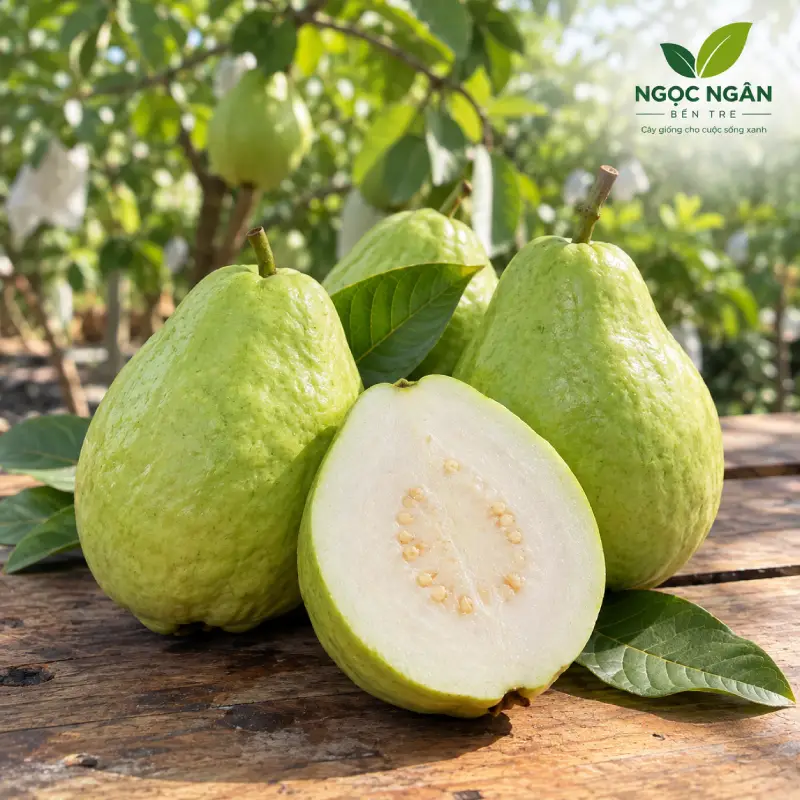
Guava, mango, jackfruit, durian, star apple, pomelo, orange, mandarin, rambutan, mangosteen, custard apple, avocado and more.
Coconut
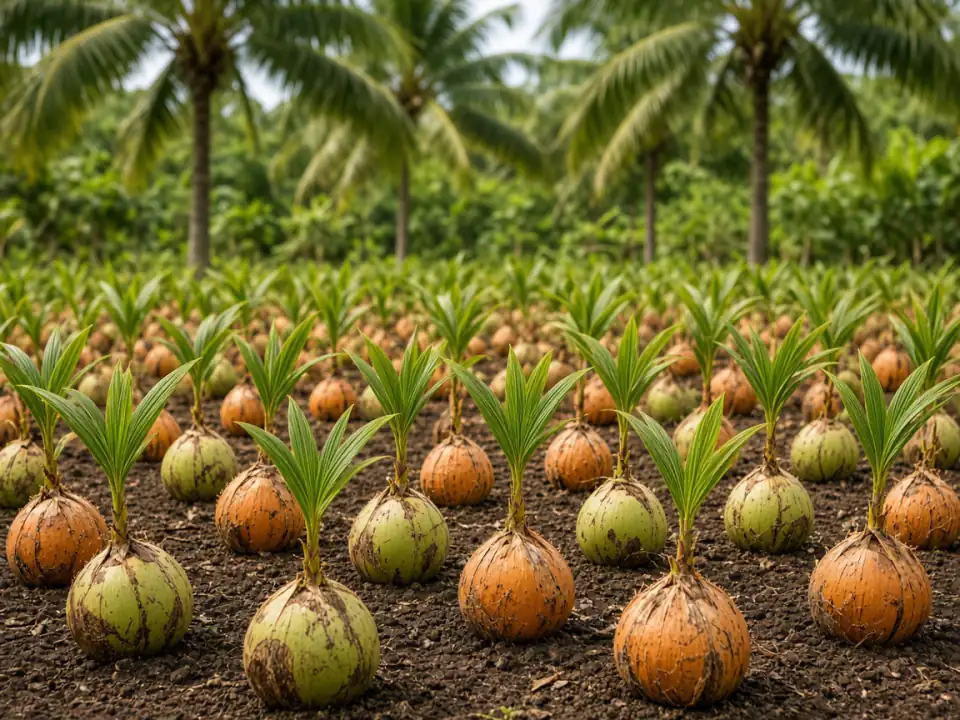
Ben Tre is famous for coconuts, so varieties such as green Siamese, dwarf Siamese, red Siamese, pandan and macapuno coconut are also widely produced, at several growth stages.
Grafted or air-layered?
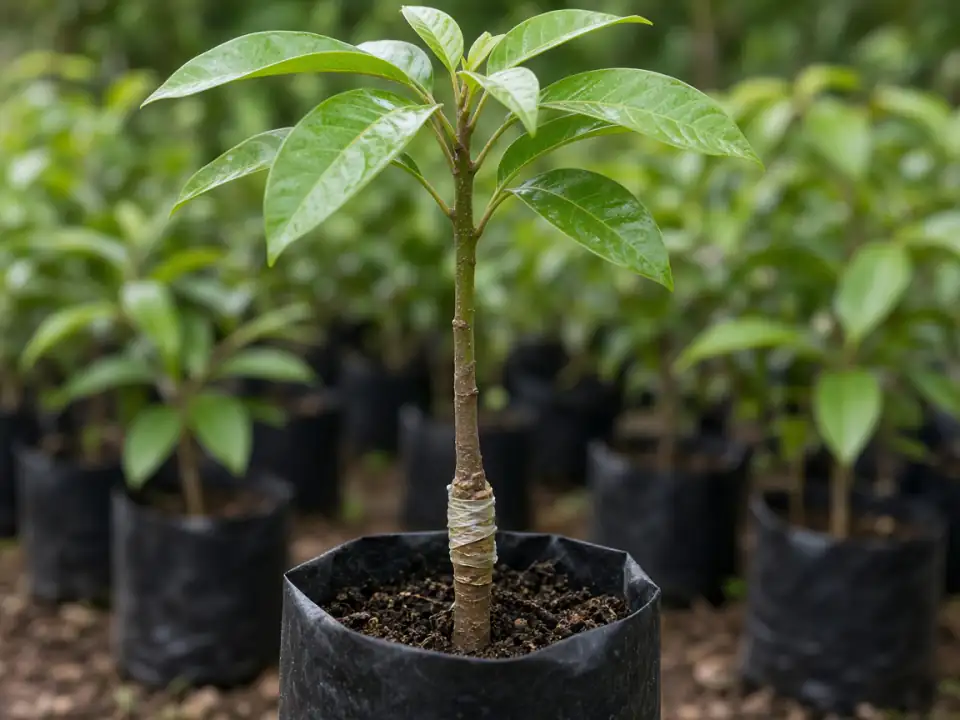
- Grafted: the desired variety is joined onto a suitable rootstock and keeps the traits of the mother tree. When buying, check that the graft union is closed and firm.
- Air-layered: propagated from a branch of the mother tree. A good one has strong roots, balanced branches and no pests.
Not every variety suits the same method, so choose based on the plant and what you are growing it for.
How to choose a healthy seedling
A big seedling isn't necessarily a good one. When buying, check:
- Trunk: sturdy, not crooked or damaged.
- Leaves: few disease spots, no caterpillar damage or unusual yellowing.
- Roots: evenly developed, with an intact soil ball.
- Graft union: closed, firm and free of cracks.
- Clear origin: ask about the variety, propagation method, mother tree, age and size, and aftercare.
What to keep in mind when buying
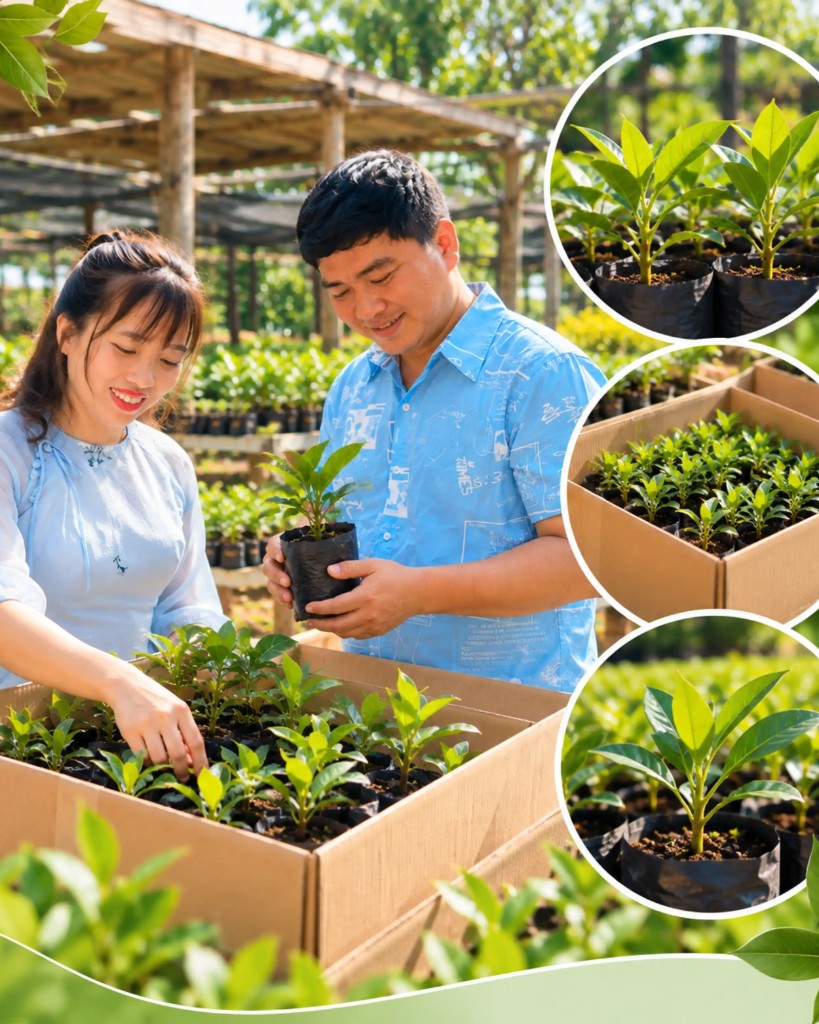
Be clear about why you are planting. For a few trees at home, prioritise healthy, easy-care plants that fit the space. For a larger orchard, also consider soil, climate, spacing, time to first fruit, plant size and shipping.
Don't choose on price alone. A cheap, poor-quality seedling can cost you a lot of time and money later.